I’ve thought a lot about happiness and good habits. In my books The Happiness Project, Happier at Home, andBetter Than Before, I explore what actions we might take to make ourselves happier—and how we can shape our habits to help us actually do those actions.
One habit that many people would like to follow? They’d like to eat more healthfully. People have many reasons to want to do this—to manage their blood sugar, to avoid food sensitivities, to cultivate their cooking skills, and for many people, to lose weight. (You may argue that people should eat healthfully for good health, and not frame this issue about “weight.” That’s true for many people. I’m not saying a person should do this—however, I talk to a lot of people about the habits they want to form and why, and many people do indeed report that they want to lose weight.)
Another habit that people would like to adopt? They’d like to maintain outer order more consistently. As I write about in Outer Order, Inner Calm, for most people, to a surprising degree, outer order contributes to a feeling of inner calm, inner energy, a sense of possibility.
And, I’ve noticed, these two habits often go together. Not necessarily for rational reasons, but in practice, I’ve observed (in other people and in myself), when we get our stuff under control, we feel in more control of ourselves, our actions, and our bodies.
As odd as it sounds, cleaning out your coat closet can make it easier to avoid the vending machine at work. Good habits build on each other. Outer order builds a feeling of inner self-command.
How can you harness this connection between outer order, eating healthfully, and losing weight? Consider…
Close the kitchen.
One common eating challenge for many people is nightly snacking. Dinner is over, but around 9:00 p.m. we wander through the kitchen, eating a handful of this or that. Or at 11:00 p.m., we find ourselves spooning ice cream out of the container, or peanut butter out of the jar (my husband’s favorite treat).
To help end this, close the kitchen. Put everything away properly, with no open bags on the counter or half-covered dishes in the fridge; close the drawers and cabinets; wipe the counters; turn off the lights. If your kitchen has a door, close the door.
By creating an orderly, closed kitchen, you help signal yourself, “Eating time is over for the day.” It feels odd to go back in there, and it discourages you from just “looking around.” Bonus: brush your teeth.
Create outer order to harness the power of the Strategy of Inconvenience.
If a bag of potato chips is sitting open on the counter, it’s a lot easier to reach in and grab just a few—and then keep going. If the bag of chips has a clip to keep the bag tightly closed and is sitting behind a cabinet door on a high shelf, it’s much easier to resist. Research shows that to a hilarious degree, we’re very influenced by the slightest bit of inconvenienceor convenience. Along the same lines…
Use outer order to put things out of view.
When we see something, we think about it. When we don’t see it, it’s easier to forget that it’s even there. So if you’ve baked cookies for your kids to take to school, box them up and put the box out of sight right away. If you leave the box out on the counter, you’re more likely to keep reaching in. If you’re worried that your child will forget to take the cookies if they aren’t right by the door, put the box in a plastic bag and knot the bag shut, so you can’t see them, and you’d have to rip open the plastic bag to get to the box. Then put the bag with the cookies by the door.
Do not expect that you’ll be inspired to eat more healthfully by keeping clothes that no longer fit.
Very often, when people go through their closets, they find clothes that no longer fit. These items haven’t been worn in years, but people hang on to them, to signal to themselves, “One day I’ll be back to that size, and then I’ll wear these things again.”
Giving these clothes away seems like an admission that this change will never happen.
In my observation, the presence of these clothes doesn’t help people eat better. If you want to eat better, work on that! My book Better Than Before is crammed with ideas to help you change your eating habits. But the guilt and anxiety—not to mention the crowded closet—created by these unwearable items doesn’t help. Their presence acts as a discouraging drain, not a helpful spur.
When I’m helping a friend to go through a closet, and we run into this issue, here’s what I say—and it really works.
I say, “Imagine the day when those clothes fit again. Do you think you’ll feel like wearing these jeans that have sitting on the shelf for years, unworn? Or do you think you’ll want to buy some new jeans?”
This is a hopeful prospect. And it’s true! This thought often allows people to give away those clothes.
Clear clutter to help make you feel lighter.
It’s interesting: over and over, when people get rid of things they don’t need, don’t use, or don’t love, and create outer order, they say, “I feel as if I’ve lost ten pounds.” That’s the simile that comes up over and over again. Outer order creates a feeling of lightness, of greater ease and freedom—people literally feel like a weight has lifted off their bodies. So if you’re feeling weighed down or burdened, clearing clutter can be a way to create a feeling of lift and energy in your mind—one that will actually energize your body. And that feeling of energy, in turn, will make it easier to stick to good habits. (That’s the Strategy of Foundation.)
How about you? Have you experienced a connection between outer order and healthy eating?
Gretchen Rubin is the author of the #1 New York Times Bestseller The Happiness Project—an account of the year she spent test-driving the wisdom of the ages, current scientific studies, and lessons from popular culture about how to be happier—and the recently released Happier at Home and Better Than Before.On her popular blog, The Happiness Project, she reports on her daily adventures in the pursuit of happiness. For more doses of happiness and other happenings, follow Gretchen on Facebook and Twitter.
In September, I disappeared in Seoul and caused everyone who cares about me to think I was having some kind of breakdown. I deactivated my Twitter account, and refused to engage with anyone other than my closest friends. I got to the point where I felt I had to drop everything, and then I came back and chose things that could return, one by one. Some things still haven’t made it back. Maybe they never will.
What took me to that point was three team turnarounds in three years. The final one, with a fractured shoulder whilst buying and renovating a house (also a turnaround). But that is the big story – what took me to that point was a thousand choices, made at various decision points, that consistently put my own well-being last. What took me to that point was some deep seated need to act as-if I was some highly-optimized, resilient robot rather than a physically hurt human being with her own needs and life.
It was hard to untangle this, because the ways in which I am good at the turnaround are directly related to the ways in which I am bad at being a human in the world. I focus on the important – I let things that are not important go (but life is made up of unimportant things and it’s hard if none of them are “done”). I stop dysfunction like some kind of human shock absorber – I am afraid to let people into my own dysfunction, to the point of being willing to shut them out entirely. I have high standards – the standards I would hold other people to are nothing compared to the standards I have for myself. I see it as my job to live in the space of ambiguity and create clarity for other people – I don’t prioritize resolving ambiguity for myself. I am very driven by values – sometimes the values I hold conflict with what I need as a human.
“Show me your heart like transparent Glass Catfish” ~Seoul Aquarium
In this space, when people expressed concern it was met first with bewilderment, then resentment. Bewilderment, because this was – as I understood it – what I had been asked to do. It was always going to be terrible for me, the real surprise was how badly my shoulder was injured and that renovating a house was extremely terrible too. Resentment, when that concern came as feedback, to which I wanted to respond, “I did what you needed, I’m sorry it didn’t look pretty, too.”
In a distributed environment, no-one needs to know how you really are.
Around the time I disappeared in Seoul. I was winding up on the third turnaround team, handing it back to the proper person. I was deeply burnt out, and my then-boss hadn’t decided what team I would go to, resulting in me drifting around without a clear place to go, unsure of what I could take on – my life in general feeling on hold around medical appointments and waiting.
At home, I found a therapist, finally unpacked and started living out of closets rather than boxes, did the work of building a life in the city I had spent the best part of a year calling home but didn’t feel like home yet, prioritized medical appointments above everything else (with some help from my mom). At work I covered a month of parental leave for one of my peers, and the engineer leading a huge project (the new editor) asked me to come help him. I joked to my peer leading that part of the organization that he had brought me to her like a cat with a dead animal offering. I “joked”. It felt true.
“I’ve found out that life and soul are the most essential elements in art.” ~Arario Museum in Space, Seoul
We rolled out the new editor. I moved to another team, reporting to the CEO again – I was grateful to him for resolving the drifting, but felt like I was doing what everyone else wanted me to do – although how could it be any other way, when I didn’t know what I wanted myself? I kept going to therapy, got to the place where I could confront some of my less appealing characteristics, spent time with friends, finally shared pictures of the house. Had moments where I could contemplate feeling okay again, even if that was definitively, absolutely, not right now. Always contingent on things outside of my control.
Today I feel okay, even happy. Things are not perfect, but I have a sense of direction and purpose, some kind of stability – some internal, some external. Various things came together, and it started to feel like enough to go on. I started to feel like enough.
Only the most perceptive people notice when you disappear
Raccoon ~Seoul
This was not supposed to be a story about burnout, this was supposed to be the things I learned working through it and being able to see the other side. But it feels dishonest to write about how to make teams more functional without some level of insight into what that process has done to me. It feels futile to talk about working through burnout, without some insight into the context that burnout was within. Only the most perceptive people notice when you disappear, especially if the Achievements keep accumulating because it’s easy to assume busy instead. Not everyone can be present when you’re a shadow, simpler and less confronting to say “let me know if you need anything” and disappear instead.
When I think about burnout, I always come back to the Maslach Burnout Inventory (there is a book, but it’s more succinctly summarized in this article). It is a helpful framework for thinking about burnout, in particular the five causes of burnout that are not overwork. They are: lack of control, insufficient reward, lack of community, absence of fairness, and conflict in values.
Lack of Control
Lack of control was a huge factor for me. Both on a personal level (the healthcare system and builders), as a human at work (what is my job now?) and in a work context (these things are not working well, but out of my remit to fix). This is really what triggered my disappearance in Seoul, when I realized going with the flow was leaving me completely miserable, and even (in a certain context) triggering an existential panic where I wasn’t sure if I existed at all. It was a topic that came up again and again in therapy.
Owl, Tokyo
Letting go of everything allowed me to focus on things within my control. The relationships I was confident were good, the appointments and calls I could make to move things forward, the remit I had at work. I refused to engage with the ambiguous or bad, and demonstrated to myself that most things continued without them. As I let them back in, I was very deliberate in giving them an appropriate place in the hierarchy of importance, and any supporting structure needed to be manageable.
I learned more is within my control than I thought, and that I need to accept and manage the impact of things outside of my control. The result of this is that I feel more centred and less blown about by uncertainty or ineptitude. I change what I can change, influence what I can influence, and when neither is an option, I aim to contain it and move on.
Insufficient Reward
One way to look at the situation I was in – drifting – was that the reward for doing a good job was the ambiguity, because the only decision that had been made was that I wouldn’t go back to my previous team. I understood (and agreed) to this, but it definitely left me living in a space of uncertainty that got harder and harder to manage over time. I felt less confident – did my boss really value me? Would other people think I had been demoted? Would what I ended up being given be something I even wanted?
In response to this, I searched for validation elsewhere. Focused on shipping things: internal blog posts, progress reports, external articles. Hoarded complements. And with people I trust, admitted that I felt terrible and straight up asked for the validation I needed. These things helped in the moment, although fundamentally they needed to come with a change in mindset too – one of looking for information that supports a positive hypothesis, rather than a negative one.
Lack of Community
It is a truth universally acknowledged that leadership positions are lonely. In many ways, I got myself into this situation by so badly wanting my peers to be a team and being prepared to do things in service of that. At the lowest point, though, I did feel disconnected from them in terms of tempo – they were busy and focused and I was drifting around. They had direction and I was lost.
This was a time to lean on the community I had worked hard to build. When I left our group to move to the new team, one of the most meaningful things was the support and enthusiasm of my peers in seeing it as a positive move – even as I wasn’t sure – and as I left the channels, one of them veto-ing my departure from our backchannel and peer support call.
“If all relationships were to reach equilibrium then this building would dissolve” ~Arario Museum in Space, Seoul
other people assumed I felt the most confident at a point where I felt the least confident
It was also a time to build community. On my new team, and with other groups of people who it’s in our remit to help. Peers in other parts of the business, all engineering team leads, everyone involved in our hiring processes. This work is just beginning, but I am genuinely excited for it.
Last week I was at a leadership offsite where we had an intense development week. A coaching exercise with a colleague I don’t normally have much interaction with surfaced that other people assumed I felt the most confident at a point where I felt the least confident. This is one of the dissonances that can arise when people don’t see each other, and I think in the absence of other cues, can make it easy to assume someone is busy and not reach out. I’m not totally sure what to do with this, but I can at least model the behavior I want, and make more effort to check in.
Absence of Fairness
There was one situation in particular that really got to me – a lot of my time was wasted, I was denied any kind of input, and a situation was forced onto the team that I felt negated much of the effort I had made. It felt like a situation where “assuming best intent” and trying to be helpful – usually a good thing and a strength – in the wrong situation feel like an attack vector.
I’m not confident in what I’m taking from this, yet. On a concrete level, the importance of documenting and being direct. I think it’s easy to assume that “other people notice” but if they don’t this can lead to a cycle of frustration. Usually little things are just that – little things. However sometimes they are a product of something much bigger and much more problematic. If no-one flags the little things, the patterns take much longer to surface.
On a meta level, it’s reminded me to ask, “how much is this is my problem?” and accept that sometimes the best we can do is manage the impact of failure, because we do not have the power to prevent it.
Conflict in Values
“Inframince” ~Arario Museum in Space, Seoul
This came up, and particularly when people’s stated values differ from their lived values – creating a compound effect. This is a concept that has come up a lot in coaching for me – for every turnaround project – the question “what values is this hitting for you?”
so much of good management seems to be about being a decent human being
I am personally very values driven; so much of good management seems to be about being a decent human being. Of course, being decent is rarely the easiest path in the immediate frame, and often a lot of work. This is the kind of dissonance that will escalate a disagreement to existential crisis for me.
Again, it is a strength, values scale much better than people or process and creating values on teams is part of how I have been effective, and able to hand things off. However, the downside is clear and intense. I think this is true for a lot of effective people who burn out – we are good because we care, but the downside is that care is for a reason – often values – and we struggle when those values are violated. It can seem like the path for success is to be more self-serving and care less, but that just creates the situations that we claim we don’t want. If we want things to be different, we have to make them different as we can, but in a way that isn’t self-destructive, or requires changing the core of who we are.
This is not a concrete takeaway, so concretely, I seek to support people rather than systems, make sure my work aligns with and communicates clear values, and ask questions and seek clarity on things that are open to interpretation or are potentially problematic.
Work Overload
“Live without dead time” ~Museum of Art, Seoul
Of course, in all of this, working a lot was a factor. I worked long hours and regularly over weekends (even if “just” travelling so as to avoid missing a weekday). In many ways overload was a multiplying factor, though; I used working to avoid things I didn’t want to deal with (like the building site or the medical system), and the fact that I had worked so hard compounded the existential problems of reward, fairness and values.
The first thing I changed here was working to make the time I did take off better. Moving to a place where I could have a separate office (I work from home), and organizing my living space and containing the mess such that I could have a place to relax without seeing a physical todo list in the form of things not yet done or tidy. The better my physical space has been, the better I have felt. The first time I had a weekend where I didn’t have any domestic stuff I needed to do was a milestone.
Within that, I made more effort to stop work by 7pm, and then be deliberate in spending my time on what would make me feel better. E.g. making an active choice between the gym and bringing some sense of order. When I needed to work a weekend, I made a point to balance that with other things I needed – like working in a coffee shop for some human contact, and breaking up delivery points with things for me. And also making sure I didn’t make the exact same mistake the following week and have to work a subsequent weekend.
The second thing was a resolution to take statutory holidays. These are not super meaningful to me – as an atheist, I don’t celebrate religious holidays, and in a distributed environment there are always other people working. However coming to see them as like weekends – arbitrary days that we have agreed as a society not to work – has been helpful. Yes, I could take a three day weekend any time when flights to Paris are cheaper, but I can take that three day weekend and the arbitrary one too (and using the arbitrary one to play video games is completely reasonable).
Similarly, I started taking time off for medical stuff. This wasn’t always possible (it’s unfortunate if one is in hospital on a day that is supposed to be release day, for example), but overwhelmingly has been. If I have to go to the UK to see the doctor, I take the entire period, rather than trying to work around flights and transit and appointments, to do what is going to be best for me. This was a bit of a culture shock for me, at the Conglomerate when people were sick they “worked from home”, but in an environment where people already work from home people actually take sick days. Including me.
Finally, I think it’s always worth taking time where there is opportunity. I took an extended break between ending my last job and starting this one (I fulfilled a life goal and went to Tuvalu). I made two weeks of space between the first team and the second, even though I had some work to do, I was free of responsibility and had two amazing long weekends (one in London, and one in Paris). Winding up on the second team made space for the disappearance in Seoul – where I had many positive experiences (including meeting a raccoon!) even though I didn’t feel particularly positive in myself.
The Other Side
The TL;DR of this is perhaps that I have spent a lot of time lately confronting the shadow side of my strengths – the personal cost of the professional “success”, and how that manifests as burnout. It’s hard to understate how confronting this has been, how difficult, and it’s still far from done.
I know, though, it’s something I am far from alone in. Burnout is the epidemic of millenials, and the epidemic of tech, particularly in those of us who genuinely and deeply take on the work of inclusion, of trying to make the functional environments we have never, or rarely, experienced ourselves. A while ago I wrote that the third shift of inclusion work is to heal ourselves and more than ever I believe this is true. Broken leaders cannot create functional environments – especially if we have power, we owe it to the people we work with to do the work on ourselves that makes us safe and reasonable people for others to show up to.
“Forgive Yourself” ~Sign in Tulum, Mexico
Thanks to my colleagues who engaged so openly in our leadership training, which helped me break out the other side of this, my boss who looked out for me at the worst point, and the amazing community in our engineering managers slack, who started the conversation that made me realize I was ready to write this, and inspired me to do so.
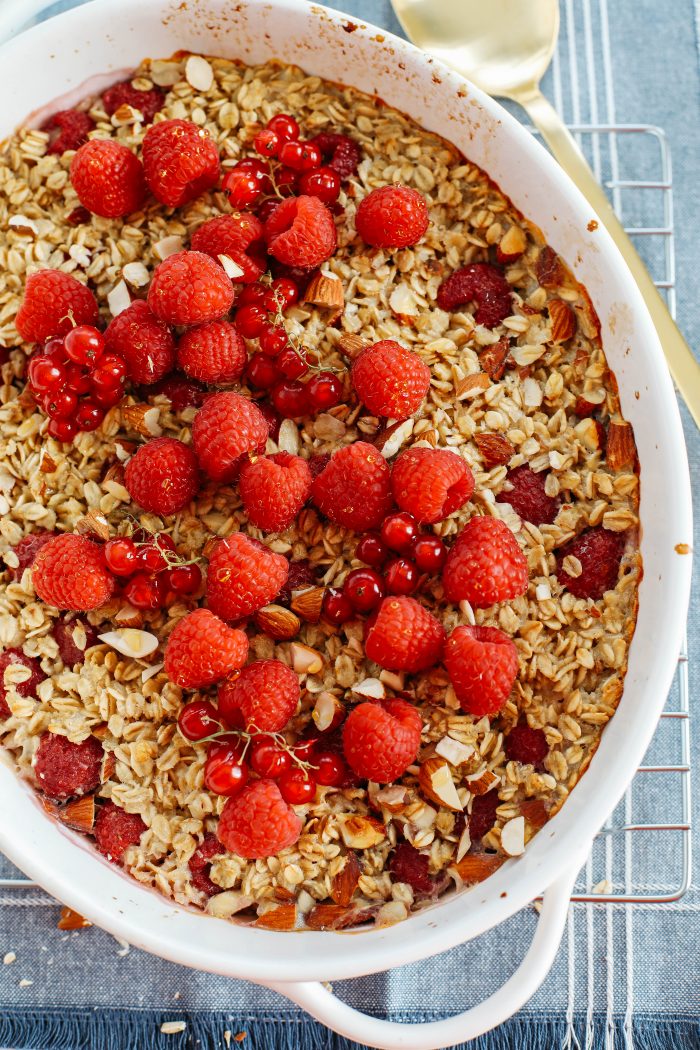
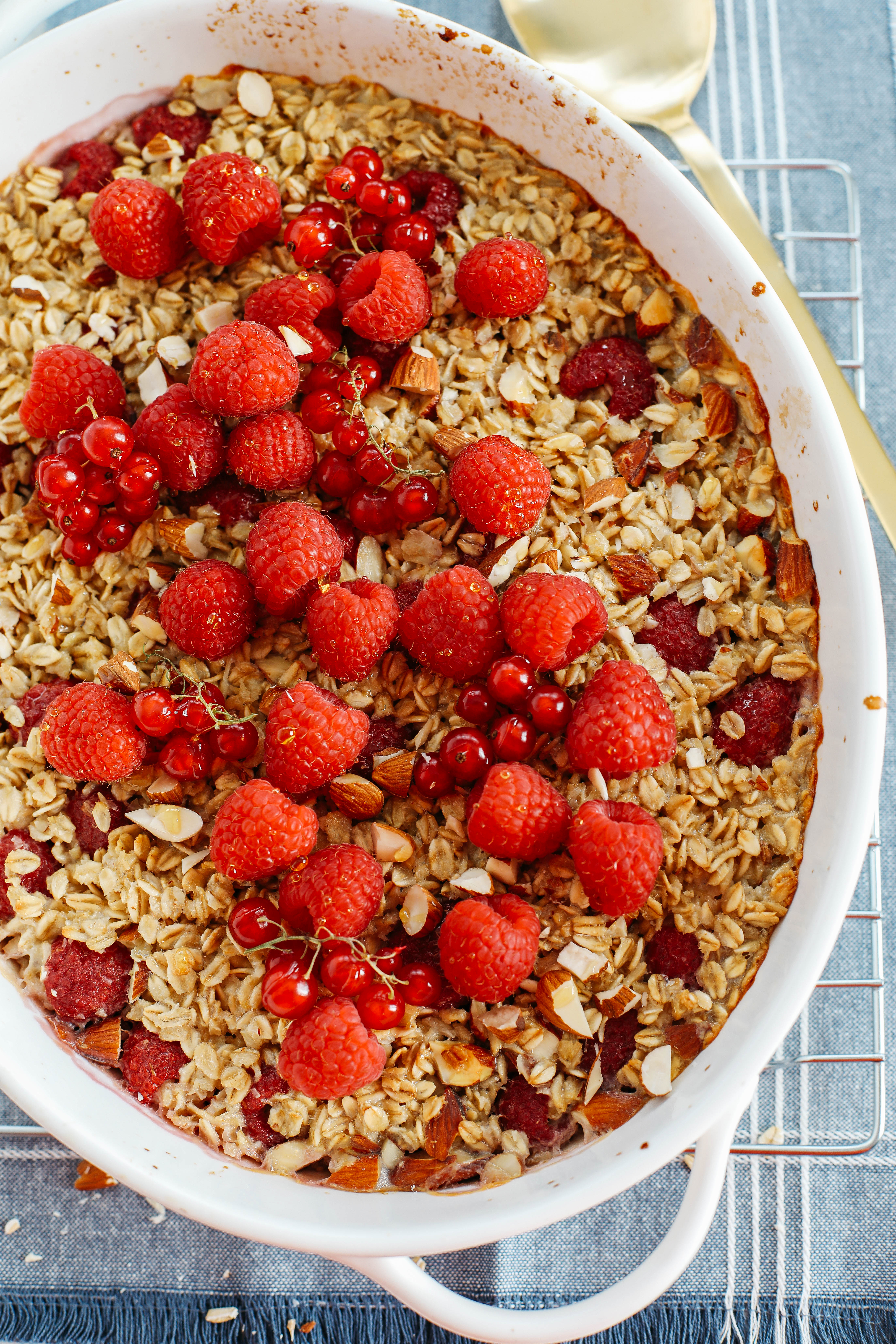
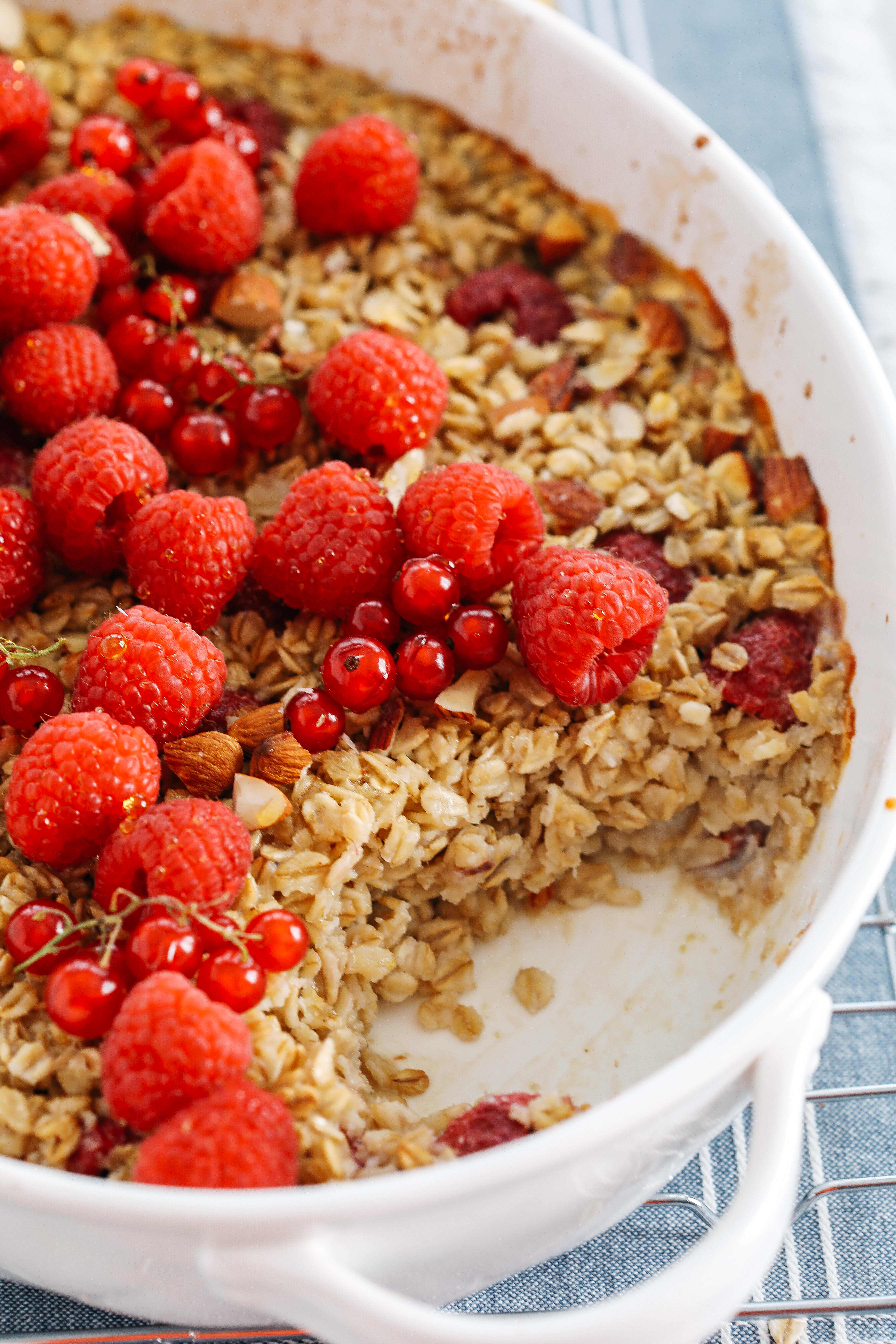
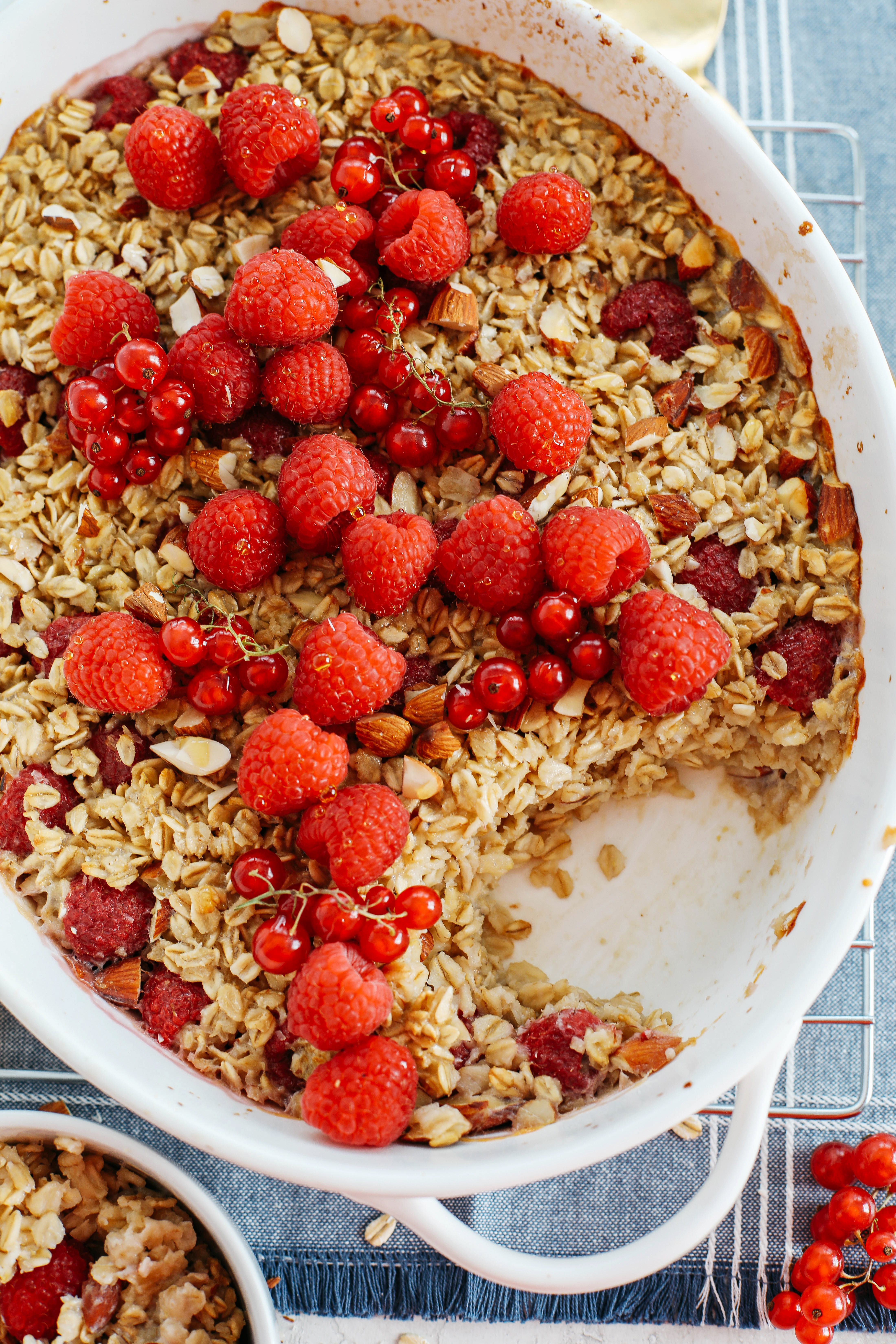
Start your morning off with this delicious Raspberry Almond Baked Oatmeal that is filling, wholesome and naturally sweetened for a perfect healthy breakfast!
There is nothing better than starting your morning off with delicious baked oatmeal loaded with your favorite berries and crunchy almonds! Not only does this recipe make your whole kitchen smell absolutely amazing, but this my friends is comfort food at its finest!
I love baked oatmeal for breakfast because it’s such a great source of fiber and definitely keeps me full well into lunch time which is important while I’m pregnant haha. I’m constantly hungry guys! This recipe is also perfect during these cold months too because everything about this dish screams warm, cozy and comforting.
Another reason I love baked oatmeal for breakfast is because it’s the perfect make-ahead dish that even tastes better the next day! It’s also a great recipe to add to your meal prep rotation because you can easily re-heat leftovers and I usually like to add a splash of milk just to keep the oatmeal from drying out. Feel free to top your oatmeal with even more berries, chopped almonds and a drizzle of honey or maple syrup!
Helpful Tips and Tricks:
To prep this recipe ahead of time, simply mix all of your ingredients together and place in a prepared 8×8 (or 9×9) baking dish, cover and refrigerate overnight. Then just pop it in the oven and let it bake for 30 to 40 minutes while you get ready for work!
This recipe uses no eggs which makes it a great vegan option, simply use maple syrup instead of honey. This can also be easily made gluten-free by substituting with gluten-free oats.
Feel free to make this a seasonal dish by swapping the berries and almonds with fresh chopped apples, pecans and some cinnamon or you can add a mashed banana which will make this oatmeal even more moist!
This recipe will keep in your fridge for 3 to 4 days, just reheat in the microwave with a splash of milk for about 50 to 60 seconds.
Hope you all enjoy this recipe as much my family does! It really is super simple to throw together and everyone will feel like they’re enjoying dessert for breakfast, which is NEVER a bad thing! Am I right??
2 cups of unsweetened almond milk (or milk of choice)
¼ cup honey (or maple syrup)
2 Tbsp olive oil
1 tsp. vanilla
1 cup fresh raspberries + more for topping
Instructions
Preheat oven to 350 degrees F.
In a large bowl, combine oats, ginger, salt, and chopped almonds.
In a separate bowl, whisk together milk, honey (or maple syrup), oil and vanilla then add to oat mixture, stirring until just combined. Fold in fresh raspberries or berries of choice.
Spread oat mixture into a prepared 8×8 (or 9×9) baking dish and bake for 30 to 35 minutes until oats have set.
Remove oatmeal from oven and let stand for 10 minutes. Top with additional fruit and drizzle with a little honey or maple syrup if desired. Enjoy!
Nutritional Information
Serving Size: ⅙th of recipe • Calories: 211 • Fat: 8.7 g • Saturated Fat: 1.1 g • Carbs: 31.9 g • Fiber: 4.7 g • Protein: 4.4 g • Sugar: 12.6 g • WW Freestyle Points: 7
I was talking to Marie Forleo about some of the unexpected lessons she has learned while taking her business from a side hustle she ran while working at a bar and as a choreographer, to the ever-blossoming empire it is today. Her biggest lessons have been some of mine too. Listen in:
Simplicity versus complexity. This is one I’m still learning! I have been the Queen of Complicated and taking on too much in the past instead of keeping it super simple. For example, offering a free 8 week course as a lead generating offer… *Face palm* Yes, I really did that and provided customer support on it too! My launches were complex, with a lot of options for people. My products and services included aaaall the things I know people need. Now I know it’s okay to guide people through one simple step at a time.
Like Marie shares in our conversation, every time her and her team have chosen the simpler option and minimized, it’s worked. Everything has worked out for the best and it’s been worthwhile in the long run.
2019 is a year of simplicity for me actually, and asking myself, “Is there a way this could be shared/offered/implemented in a more simple way?” I invite you to take that question into your own business.
I love talking to successful people like Marie about their biggest lessons, and many of those lessons are hard-won by making some pretty big mistakes. What I’ve learned from the lessons and mistakes of others help me stay on top of my game and create huge opportunities.
That’s why I was thrilled to hear that Marie is hosting a FREE live masterclass on February 21st and 23rd on this exact topic.
How to 45X your marketing efforts with one tool that may surprise you
The ways your website is stopping potential customers from buying your products and services
What you should focus on instead of more traffic to your website
And more. It’s Marie so expect surprises and learning in a way that’s fun, with takeaways that are simple to take action on!
Marie has been in business for 20 years, has interviewed the most influential leaders in business, and she has worked with over 40,000 entrepreneurs through B-School so if there’s anyone who has a front row seat to the big mistakes you should avoid, it’s her.
And if you’re liking Marie’s teaching style and learning a lot from her free training, she just opened the doors to B-School, the online marketing and business program for modern entrepreneurs that is now in its 10th year!
I’m a B-School grad and I coach a small group of entrepreneurs through the program each year. If you want to work with me to create your dream 2019, my B-School Mastermind and live event experience is the way to do it. Click here for all the details about my best bonus ever for B-School.
If you have any questions at all, email me directly at natalie@shetakesontheworld.com and I’ll personally respond.
There is untapped creativity inside you that will enrich your life if you learn to identify and remove the creative blocks in your way. Identify Your Creative Block and Thrive! By Lien Potgieter Untapped creativity is detrimental to your life, relationships, business, and career. If you believe that you are not creative or that there is no need for creativity, you could even become obsolete. According to the World Economic Forum, the Future of Jobs report creativity will be third on the list of the top ten critical skills by 2020. In the short space of just five years, creativity has moved up seven places from ten to number three. You can increase your creative intelligence (CQ) despite the outdated notion that people are either right- or left-brain dominant. New research shows that we need to use both sides of the brain to be successful. Unconventional paths often lead to brilliant solutions. Color, which you find all around you, could act as a catalyst to identify what exactly is causing you to feel, think or believe that you can’t connect the dots. Many problems can be solved, and challenges overcome with the help of these vibrational energies. How can color help? By becoming aware of the colors in your environment, you can pinpoint your creative block. It is a simple yet powerful method. Your color attractions and rejections demonstrate where you are stuck: Physically, emotionally, mentally, or spiritually. Only when we know what the heart of the matter is can you take action, unblock your creativity, and live a life of success and happiness. Tell-tale signs of a creative block and how to overcome it How do you know where the block is? Here are a few signs to look out for. Body: If your block has a…
Someone once said to me “you’re good at change management” and I was like, what?
I sat with the idea for a couple of weeks and eventually realized: Oh! That is what I do! I take teams that are struggling and help them focus, align, and start delivering at their potential, i.e. change management.
The thing about change management is that it involves a lot of invisible work that’s hard to follow from the outside. The two things that people see in change management are the change (toward the end, if they are paying attention) and when it goes (sometimes horribly) wrong. Here are some lessons I’ve learned from the change-management trenches, whether as the manager or the changee.
Dating apps were created to make finding your next relationship easier. With so many different platforms to choose from (and plenty of members signed on for a good time, not a long time), trying to find a match who's here for the right reasons can feel kind of impossible. If you're starting to get burned out from your online search for "the one," it might be time to reevaluate your strategy — and the apps that you're using — in order to find her. If this sounds a lot like your current online dating life, it's time to rethink the process and platforms you've become accustomed to, and try using something new.
We asked a few dating experts for their best tips and advice on which dating apps will help you find a match who's also looking for commitment. Here are some recommendations for the best apps to use if you're ready to settle down, along with a few smart strategies that will help you find her in no time.
How to Use Dating Apps to Find Your Next Relationship
If you're struggling to find what you want on a dating app (read: someone who's interested in finding a serious relationship), one challenge you may be up against is that you're not sure what your matches are looking for. Elena Murzello, author of "The Love List: A Guide to Getting What You Want," says to take a cue from this, and make your own intentions clear on your profile. "Saying, 'I'm interested in marriage and settling down immediately' comes across too strong," she says, "but something like, 'I'm looking for a committed relationship' opens up the conversation." When writing your bio, Murzello says to keep it short and sweet, and include what a potential long term partner would want to know about you. "Complete a solid profile. Having photos that showcase your personality is key: Do they invite others to want to get to know the real you? Keep in mind that no one has time to read a novel, so write succinctly and include your interests!"
As far as determining whether or not your matches are here for the real thing, Murzello says a picture's worth a thousand words. "Look at the photos carefully," she suggests. "Are these all half-naked photos? Maybe the person is looking for a hot hookup. Are they half drunken photos? She's probably partying and not looking for something serious." Low-quality photos or profiles without a bio are also signs that this person isn't putting much effort in, and isn't looking for something serious.
The time of day or night that you're typically chatting with a match can also be a telltale sign of what she's looking for. "Pay attention to when they're making conversation with you," says Lauren Levine, dating expert and co-host of The Margarita Confessionals. "Is it during the workday when they're bored and trying to pass the time? Is it really late at night? This is probably someone who's not looking for a relationship. Also, the conversation should have substance to it. If it's just, 'How was your weekend?' or 'What are you doing today?' for days on end, they're probably not looking to get to know you on a deeper level."
Levine says to also keep this rule of thumb in mind when you're messaging matches. "If they have a real conversation and want to get to know you as well, they're probably interested in something more," she says. "If you're getting one-line responses, they're probably not trying to invest in someone. Also, meet up as soon as you feel comfortable. It's so much easier to understand what someone is like and what they're looking for when you're with them face to face."
The Best Dating Apps for Relationships
Coffee Meets Bagel
The more potential matches you have, the more likely it is that you're going to find the right woman for you, right? According to James Anderson, dating expert at Beyond Ages, this way of thinking can actually end up backfiring when you're in the market for something more serious. "Many dating apps and dating sites are essentially a numbers game," he says. "You look through hundreds of profiles, message dozens of people, and maybe get a few dates. With Coffee Meets Bagel things are very different. You receive a daily match that is properly filtered to be in line with what you are looking for. Since you only get one match a day, each person actually takes the time to review the match instead of making a decision in two seconds based on the photo."
.
You've seen the commercials, you've heard the success stories, and while you've probably toyed with the idea of putting money behind your search for a relationship, you still haven't pulled the trigger. If you haven't recognized the theme here, let us be straightforward with you: The more involved a dating app is, the less likely users will use it for low-commitment casual encounters. There are plenty of functionalities you get with Match that make the process more straightforward, from algorithms that point out similarities when viewing profiles to the ability to upload more than a handful of photos, so that you get a fuller picture of the person you're chatting with.
The League operates under a similar limited match system as Coffee Meets Bagel. In fact, you may even have to wait to sign up, whether that's a few days or a few months depending on the user base available where you live. After you jump through those hoops, you're given three matches per day based on the preferences that you outline, which include proximity and age. While getting started on The League can take a while, the app’s acceptance process does ensure that the people using it are taking it seriously. The League will actually kick inactive users off after two weeks, which ensures the people you're matching with are actually using it.
Online dating burnout can happen to anyone, but for relationship-focused women who are getting grimy messages sent to their dating app inboxes on the regular, this can end up making them throw the towel in. Bumble combats this by making the app's messaging features ladies' choice. "One of the biggest turn offs from online dating is that women are absolutely bombarded with messages from guys," explains Anderson. "This can turn a lot of eligible women off and lead to some uneven power dynamics with many online sites. With Bumble, once you match with a potential partner the woman must make the first move. This allows for a better experience for women, a high quality of users, and overall a better experience for everyone."
If you're tired of trying to determine your compatibility with potential matches based on a few photos and the three emojis they include in their bio, look no further than Elite Singles. In order to sign up, members need to complete a comprehensive personality test, which is then used to identify matches in your area. After you're signed up, the site sources 7-10 potential matches per day, which eliminates the time suck of swiping back and forth, and makes for a more commitment-oriented user base (because no one in their right mind is going to spend 45 minutes on a questionnaire if they're just trying to get lucky).
In case you haven't been paying attention to billboard ads, the O.G. dating site OkCupid is having a rebranding moment, positioning themselves as a relationship-focused app. This means chances are high that single women in your area have recently re-downloaded this app in hopes that this isn't some false advertising. Commercials aside, there are features on OkCupid that lend well to finding a match that's looking for the same level of commitment you are. For starters, the platform features a more comprehensive profile, which allows members to fill out their interests, what their typical Friday night looks like and what they're doing with their lives, giving you a more well-rounded idea of who you're chatting with. You can also search using keywords (think "commitment" or "looking for something serious"). Depending on how many questions your match has answered on issues that are typically off the table for first date talk like politics and religion, you're also given a percentage of compatibility to see what your odds are.
Similar to Coffee Meets Bagel (and true to its name), Once gives you one match per day based on your preferences. You also won't come across any blurry, low quality photos on the app, since there's a team that verifies each profile photo uploaded to ensure it's of good quality (which can take up to 24 hours). While not as extensive as some of the other apps on this list, there are a list of questions you'll have to answer in order for the app to start curating potential matches. Your daily match expires within 24 hours, which means users stay engaged in order to make sure they don't miss out.
Every day we wake up and as a mom we are in a battle. A battle to see if stress is going to win, or we will! Some days, it is just one of those days, and before the kids even get out the door I’ve thrown in the towel. (If they could just hang up the towel maybe…) Other days I win, and I’m able to beat the stress away.
As Brad pointed out in his post, “Stress and the Men Who Hate It”, we have a choice in how we handle the stressful situations in our lives. We can take the stress and demands of the day and let them effect everything else in our lives and marriage or we can fight back. The truth is, we have the CHOICE!!
I am guilty of making the wrong choice at times where stress is concerned. Sometimes I just want to give into the frustration and anger. But then I look at my hubby and my kids and I see what that does to them. Nothing good, that is for sure! There are other times that I step back from my frustrations and take a minute to pull myself together. I whisper a prayer and push forward in a way that I know will not diminish the value of my hubby or kids. It is those times that I look into my family’s eyes and know that I have chosen well.
Giving into your frustrations.
Giving in your frustrations feels good at times. It feels justified for all that you have had to deal with. In the moment that is, but afterwards, it feels horrible. While we all have moments of needing to “vent” we need to discern where and when that is appropriate. As I know in my own life, indulging in frustrations usually fuels the flame higher. I want to put out the flame of stress before we all get burnt.
Step back, take a breath and whisper a prayer.
Feel stressed? Step back, taking a breath and whisper a prayer. That does not fix all that has gone wrong and it does not make all of the frustration go away. It does however, help me to treat everyone around me with the love and respect I actually feel. It teaches the discipline of not acting in the heat of the moment. In Proverbs 31: 26 the wife of noble character is described as “When she speaks, her words are wise, and she gives instructions with kindness”. I would imagine that takes a great deal of prayer and self-discipline to not give into stress and give instructions with kindness. I greatly desire to be that wife of noble character in every way!
Which will you choose wives on your next stressful day or situation?
Will you choose to give in and give in to the frustration or will you choose to step back, take a breath and whisper a prayer. The choice IS ours.
I see it often. I hear comments from wives in their frustration. It is a common theme. Wives expressing that their husband is like having another child. That he adds to their stress in life, sometimes more than actual children.
I have no doubt everyone has encountered this theme in one form or another. While we can often seen themes and patterns in marriage, we need to stop and ask ourselves why those themes happen and what is behind them. Then speak truth and life into the situation.
This theme is most common after a couple has had children. I believe much of it stems from exhaustion, over taxing schedules and perhaps most importantly, lack of connection between husband and wife. The first two contribute to the last and the last breeds frustration. I am sure there are other things that contribute as well, but I believe these are the main contributing factors.
So what can we do, wives? First is recognize it for what it is. A pitfall because of our own “stuff” that we are experiencing. It is human nature, when we are tired and frustrated to look outward for the source of our frustration. Even though it is human nature doesn’t mean we should go with it. The enemy wants to use this very thing to help erode your marriage.
Second, we need to remind ourselves that: my husband is NOT another child and should never be treated as such. He is your husband and that alone is to be respected. Though you may have more on your plate and you don’t have as much time to devote to your husband as you used to, doesn’t mean he is an added stress.
Third, is to figure out how to proceed in your frustration. Looking inward first at why you are frustrated and stressed. Can that be changed by your mindset and things you are or aren’t doing. After doing your own self reflection, you can do an outward check. Is there something your husband could be helping you with. Something more you need from him, physically (helping out around the house or with the kids), emotionally (filling you up with your love language) or spiritually (praying with you and leading you). If there are needs you have, you have to be vulnerable and willing to share them with your husband. As always the way we approach such a conversation will greatly impact the outcome. Share how you are feeling with being stressed and ask kindly for help in the areas you need it.
Why, oh why are we so stubborn when it comes to asking for help? Again, it is easier to place blame outward than to humble ourselves and ask for help. I know for many years in our marriage and especially after kids, I expected Brad to anticipate my needs and to jump up to meet them. While their is a lesson for husbands in there of studying your wife and her needs, asking her regularly how you can help, we as wives have to be willing to be vulnerable and ask!
Our husbands want to be cherished, loved and respected for the men God has created them to be. They are a work in progress, just like us. We need to love them well and equating them to a child is not loving them well. Love your man well!
Wives: Is this something you struggle with as a wife? How have you overcome it? What are other things wives need to know about the subject?
Husbands: Has this been a theme in your marriage? How has it made you feel?




 .
.


